
In short
An HVAC system assessment is a technical survey of a commercial building's heating, ventilation and air conditioning plant. Engineers record each asset, inspect its condition, check how it is operating and controlled, and review maintenance records. You receive a report with an asset register, risks, recommended remedial works and priorities for repair, upgrade or replacement.
What an HVAC assessment involves
- Asset capture. Recording each item of plant, its location, make, model, age and rating plate data.
- Condition inspection. Casings, coils, fans, drives, pipework, insulation, drains, ductwork access and electrical components.
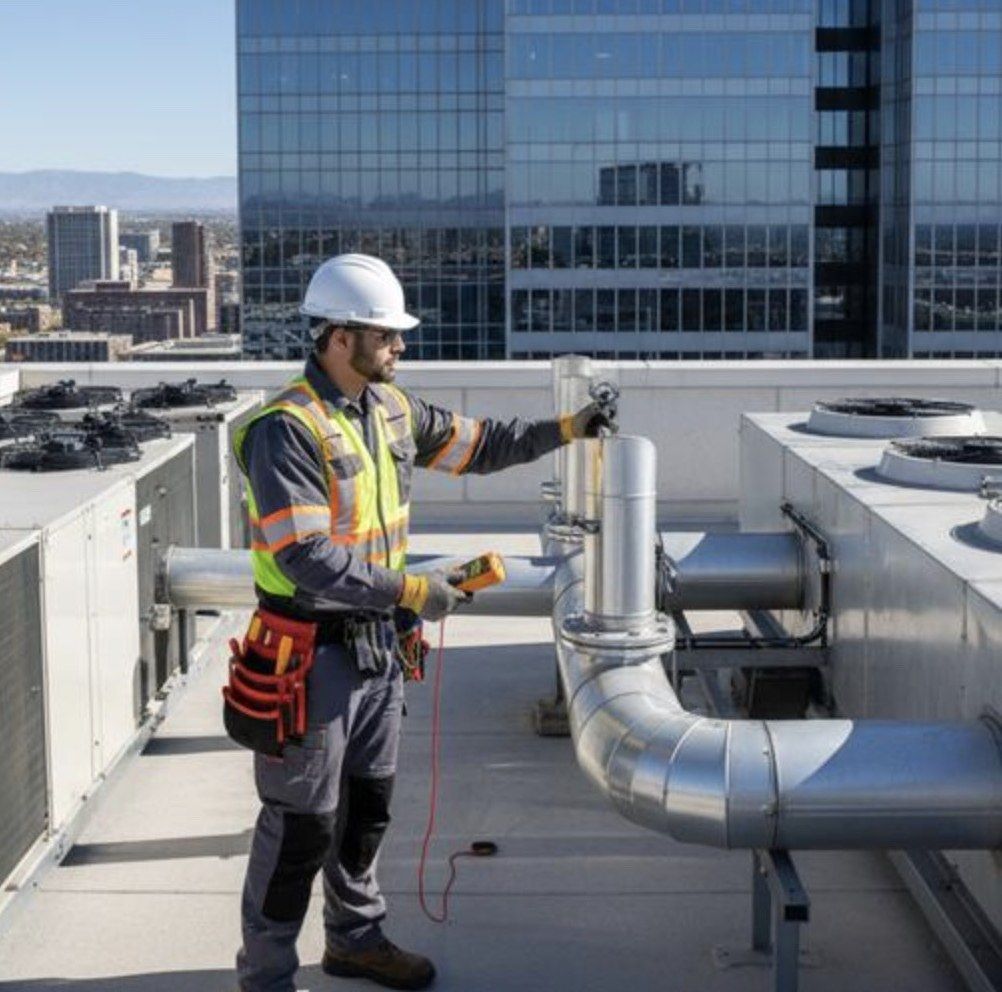
- Operation check. Observing plant running, checking readings, and reviewing controls, setpoints and time schedules.
- Records review. Maintenance history, F-gas logs, previous reports and known defects.
- Reporting. Condition ratings, photographs, risks and prioritised recommendations.
When an assessment is needed
- you have acquired, leased or taken over management of a building
- you are changing maintenance contractor and need a baseline
- comfort complaints or breakdowns keep recurring
- you are budgeting for capital replacement or planning a refurbishment
- you want to understand options for lower-carbon heating and cooling
Equipment assessed
Air handling units, fan coil units, air conditioning systems, chillers, heat pumps, ventilation and extract systems, and HVAC controls and BMS points.
Our process
- Scope. Agree which buildings, floors and systems are included and what the report should cover.
- Desk review. Gather drawings, asset lists and maintenance records you hold.
- Site survey. Engineers inspect plant with the access you arrange.
- Report. You receive findings, an asset register and prioritised recommendations.
- Next steps. Use the report to set a maintenance contract, plan repairs or scope installation work.
Typical applications
Due diligence on acquisitions, lease start and end condition records, contractor changeovers, capital planning for landlords and investors, and pre-refurbishment surveys.
Maintenance considerations
An assessment is only as useful as the asset register it produces. Keep the register updated after every installation, removal or replacement, and use it as the basis for planned maintenance.
Compliance and safety
Assessments often reveal compliance gaps, such as missing F-gas leak-check records, overdue TM44 inspections or no legionella risk assessment for humidifiers and cooling equipment. We record these observations so you can act on them. Statutory inspections must be carried out by suitably accredited people.
Coverage across London
We take assessment enquiries for commercial buildings across London and Greater London. See areas we cover.
HVAC System Assessments: frequently asked questions
When should we commission an HVAC assessment?
Common triggers are taking over a building or lease, changing maintenance contractor, recurring breakdowns or comfort complaints, planning a refurbishment, budgeting for capital replacement, or preparing for decarbonisation work.
Is an HVAC assessment the same as a TM44 inspection?
No. A TM44 inspection is a statutory energy inspection of air conditioning systems above 12 kW, carried out by an accredited energy assessor, which results in a lodged report. Our assessments are technical condition and performance surveys and do not replace a TM44 inspection.
What will the report include?
Typically an asset register, condition ratings, photographs, observations on operation and controls, compliance-related observations such as F-gas records, and prioritised recommendations for maintenance, repair or replacement.
Can the assessment help us decide whether to repair or replace equipment?
Yes. The report brings together age, condition, failure history, parts and refrigerant availability and efficiency considerations, so you can compare continued repair with replacement.
How long does a survey take?
It depends on the size of the building, the amount of plant and access. We confirm the scope and time needed before the visit.
UK guidance and references
Primary and industry sources relevant to this subject. Always check the current edition and how it applies to your building.