
In short
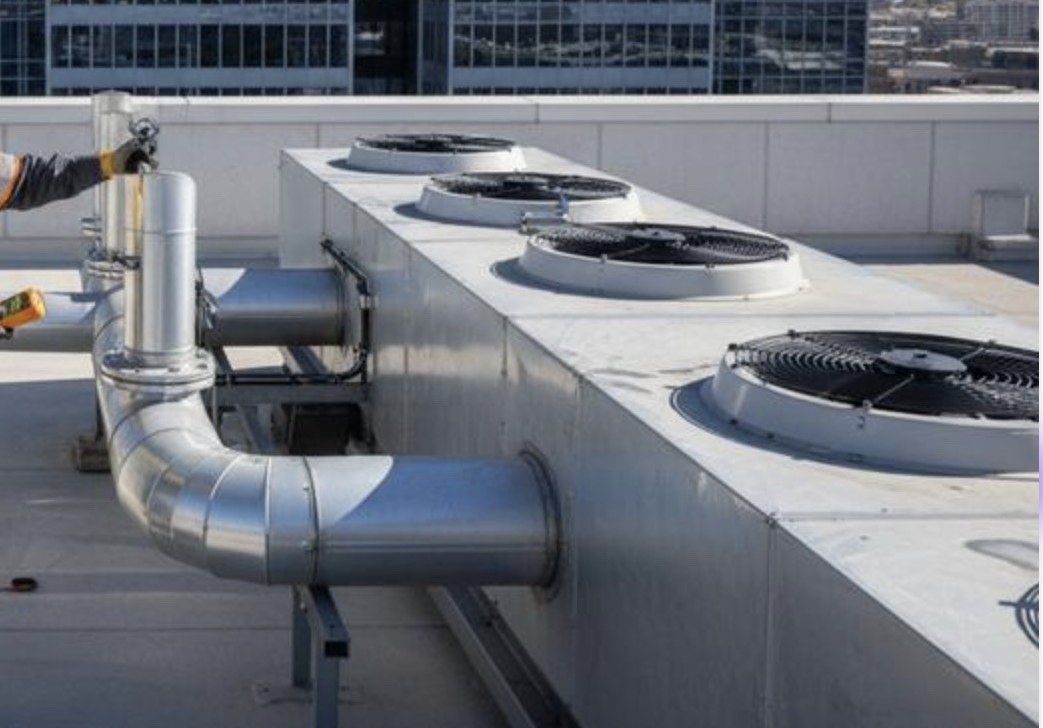
Commercial chiller services cover the maintenance, servicing and repair of the chillers that produce chilled water for air handling units and fan coils. Engineers record operating pressures, temperatures and alarms, inspect condensers, compressors and fans, check flow and controls, and carry out F-gas leak checks, so the chiller delivers reliable cooling with fewer unexpected failures.
What chiller services involve
| Area | Checks |
|---|---|
| Operating data | Suction and discharge pressures, temperatures, superheat, subcooling |
| Compressors | Running current, oil level and condition, noise and vibration |
| Condensers | Coil cleanliness, fans and motors (air-cooled); water flow and approach temperatures (water-cooled) |
| Evaporator and chilled water | Flow, temperature difference, flow switch operation |
| Controls and alarms | Alarm history, setpoints, sequencing, BMS interface |
| Refrigerant | Leak checks, records and labelling under the F-gas regulations |
When chiller work is needed
- planned maintenance visits under your schedule
- the chiller trips on alarm or will not start
- chilled water temperatures drift above setpoint
- condensers are dirty or fans are failing
- cooling demand has changed after a refit
Equipment covered
Air-cooled and water-cooled chillers, packaged chillers serving AHUs and fan coils, and associated pumps, flow switches and controls.
Our process
- Share the chiller make, model, refrigerant and any alarm history.
- We attend to service or diagnose, recording operating data.
- Defects are reported with recommended remedies.
- F-gas records are updated where applicable.
Typical applications
Offices with central chilled water plant, hotels, data and comms rooms, healthcare buildings and mixed-use developments.
Maintenance considerations
Trend operating data over time: rising condensing pressures or falling efficiency often show problems before alarms do. Keep condensers clean, especially before summer.
Compliance and safety
High pressures and heavy plant. Chillers contain refrigerant under pressure and large rotating machinery. Only competent, F-gas certified engineers should work on them.
Leak checks and records are required where the refrigerant charge meets the F-gas thresholds. Some plant falls under the Pressure Systems Safety Regulations. Water-cooled systems with cooling towers need legionella control.
Coverage across London
We take chiller enquiries for commercial buildings across London and Greater London. See areas we cover.
Chillers: frequently asked questions
How often should a chiller be maintained?
Chillers are commonly visited quarterly, with operating checks more often and a more thorough service annually. F-gas leak-check frequency depends on the refrigerant charge and whether leak detection is fitted.
Our chiller keeps tripping on alarm. What should we do?
Note the alarm code and when it occurs, then call an engineer. Repeated resets can damage compressors. Common causes include low flow, high condensing pressure, sensor faults and refrigerant problems.
What is the difference between air-cooled and water-cooled chillers?
Air-cooled chillers reject heat to outside air using fans, usually on roofs. Water-cooled chillers reject heat through a condenser water circuit, often to cooling towers or dry coolers. Water-cooled systems with cooling towers bring additional legionella control duties.
Do chillers need pressure system inspections?
Some refrigeration plant falls under the Pressure Systems Safety Regulations 2000 and needs a written scheme of examination. Whether it applies depends on the system, so check with your insurer and competent person.
Can we get temporary cooling if the chiller fails?
Temporary chillers are available through hire specialists. We can advise on connection points and help plan resilience for critical cooling.
UK guidance and references
Primary and industry sources relevant to this subject. Always check the current edition and how it applies to your building.
- F gas in refrigeration and air conditioning GOV.UK
- Pressure systems Health and Safety Executive
- Legionnaires' disease (ACOP L8) Health and Safety Executive