
In short
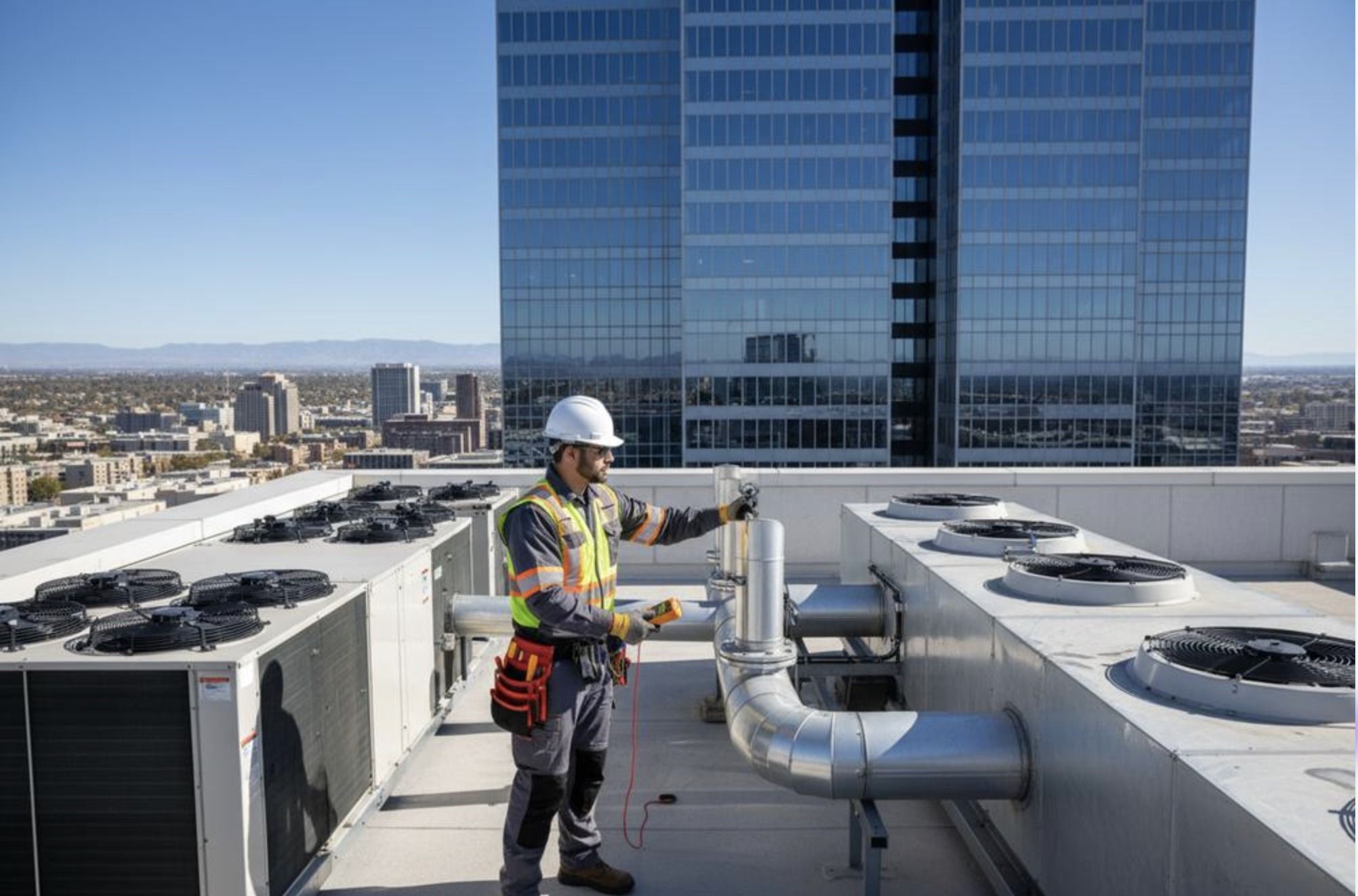
Commercial HVAC maintenance is the planned, scheduled care of a building's heating, ventilation and air conditioning plant. Engineers inspect, clean, test and adjust equipment such as air handling units, fan coils, air conditioning, chillers and controls, record its condition and flag defects early, so systems keep running reliably, efficiently and in line with your legal and insurance obligations.
What commercial HVAC maintenance involves
Planned preventive maintenance (PPM) replaces “fix it when it breaks” with a schedule of inspections, cleaning, testing and adjustment. Each asset in the building is listed, given a set of tasks and a frequency, and visited on a programme agreed with the facilities team.
On a typical visit an engineer will:
- inspect the equipment and its surroundings for damage, leaks, corrosion, vibration and noise
- check, clean or replace filters and record their condition
- clean coils, condensate trays and drains to stop blockages and microbial growth
- check fans, belts, pulleys, bearings and motor current draw
- test controls, sensors, valves and actuators, and confirm setpoints and time schedules
- carry out refrigerant system checks and F-gas leak checks where the system falls within the regulations
- record readings and findings, and raise any defects with a recommended remedy
You receive a record for every visit, so you have evidence of what was done and a clear list of anything that needs a decision.
When planned maintenance is needed
Maintenance is worth setting up whenever a building relies on mechanical heating, cooling or ventilation to stay usable. It is particularly important when:
- the building is occupied by staff, guests or the public who depend on comfortable, well-ventilated space
- the plant serves critical areas such as server rooms, kitchens or treatment rooms
- a lease, insurer or warranty requires documented maintenance
- systems are ageing and breakdowns are becoming more frequent
- you have taken over a building and do not know the condition of the plant
Equipment we maintain
| Equipment | Typical maintenance tasks |
|---|---|
| Air handling units | Filters, fan sections, belts, coils, dampers, humidifiers, frost protection |
| Fan coil units | Filters, condensate drains and pumps, valves, actuators, fan speeds |
| VRF/VRV and split air conditioning | Indoor and outdoor units, coils, drains, refrigerant checks, controls |
| Chillers | Operating pressures and temperatures, condenser condition, oil, alarms, flow |
| Heat pumps | Coils, defrost operation, flow temperatures, refrigerant checks |
| Ventilation and extract systems | Fans, belts, motors, dampers, grilles and ductwork access points |
| HVAC controls and BMS points | Sensors, setpoints, schedules, interlocks and alarms |
See the dedicated pages for air handling units, fan coil units, air conditioning, chillers and heat pumps.
Our process
- Enquiry. Tell us about the building, the plant and any current problems using the form below or by phone.
- Site survey. We visit to record the assets, their condition, access requirements and any existing records.
- Schedule and quotation. You receive a proposed task list and frequency for each asset, with a quotation.
- Planned visits. Engineers attend on the agreed programme and work to the site’s permits and induction rules.
- Reporting. Each visit is documented, with defects and recommendations listed for you to approve.
- Review. The schedule is reviewed as equipment ages, usage changes or new plant is installed.
Typical applications
Planned HVAC maintenance suits offices, hotels, retail units and shopping centres, warehouses, schools and colleges, healthcare premises and mixed-use buildings. See industries we support for how requirements differ between building types.
Maintenance considerations
- Asset list first. Accurate maintenance starts with knowing exactly what is installed. If the asset register is incomplete, the first visits should fill the gaps.
- Frequencies should be justified. Over-maintaining wastes budget; under-maintaining shortens equipment life. Base frequencies on manufacturer guidance, SFG20 and the duty the plant sees.
- Filters matter more than they look. Blocked filters increase fan energy and reduce airflow. Track pressure drop rather than changing filters purely by date where you can.
- Records are part of the job. Insurers, landlords and auditors ask for evidence. Keep visit records, F-gas logs and defect reports together.
- Plan for replacement. Maintenance reports should help you forecast when equipment is nearing the end of its economic life. See HVAC system assessments.
Compliance and safety
Safety first. HVAC plant combines rotating machinery, electrical supplies, pressurised refrigerant and work at height. Maintenance must be carried out by competent engineers under safe isolation procedures and the site’s permit-to-work arrangements.
Relevant duties include the Workplace (Health, Safety and Welfare) Regulations 1992 for ventilation and temperature, the F-gas regulations for leak checking and record keeping on refrigerant systems, TM44 inspections for air conditioning systems over 12 kW, and the legionella risk assessment duties described in HSE’s ACOP L8. Work on refrigerant circuits must only be done by engineers holding the appropriate F-gas certification. Ask us for the relevant certificates for the engineers attending your site.
Coverage across London
We take maintenance enquiries for commercial buildings across London and Greater London. Whether we can take on a particular site depends on its location, the plant installed and the visit programme required. See areas we cover for details.
HVAC Maintenance: frequently asked questions
How often should commercial HVAC systems be maintained?
Most commercial HVAC plant is maintained on a quarterly or six-monthly cycle, with some tasks monthly and others annual. The right frequency depends on the equipment, how hard it works, the manufacturer's instructions and any statutory checks. Many building operators base their schedules on the SFG20 standard maintenance specification and adjust it after a site survey.
What is included in a planned maintenance visit?
A typical visit covers visual inspection, filter checks or changes, cleaning of coils and drains, belt and bearing checks, electrical and control checks, refrigerant system checks where applicable, measurement of key temperatures and pressures, and a written record of what was found and what needs attention.
Is HVAC maintenance a legal requirement?
Several duties apply to commercial HVAC. Employers must provide adequate ventilation and a reasonable temperature under the Workplace (Health, Safety and Welfare) Regulations 1992, refrigerant systems above set thresholds need F-gas leak checks, larger air conditioning systems need TM44 energy inspections, and water systems need a legionella risk assessment. Planned maintenance is the practical way most operators meet these duties.
Can you take over maintenance from another contractor?
Yes. We start by gathering the existing asset list, maintenance records and any outstanding defects, then carry out a site survey so the new schedule reflects the plant actually installed. Gaps in records are noted in the survey report rather than assumed.
Do you maintain equipment from any manufacturer?
We work on commercial HVAC plant from a wide range of manufacturers. Some equipment under warranty must be maintained to the manufacturer's requirements, so tell us about any warranty conditions when you enquire and we will confirm how they affect the schedule.
Will maintenance reduce our energy bills?
Clean coils and filters, correctly tensioned belts, calibrated sensors and sensible time schedules all help plant run closer to its design efficiency. The saving depends on the starting condition of the system, so we report findings rather than promise a figure.
UK guidance and references
Primary and industry sources relevant to this subject. Always check the current edition and how it applies to your building.
- SFG20 standard maintenance specification BESA / SFG20
- Workplace (Health, Safety and Welfare) Regulations 1992 legislation.gov.uk
- F gas in refrigeration and air conditioning GOV.UK
- Legionnaires' disease (ACOP L8) Health and Safety Executive