
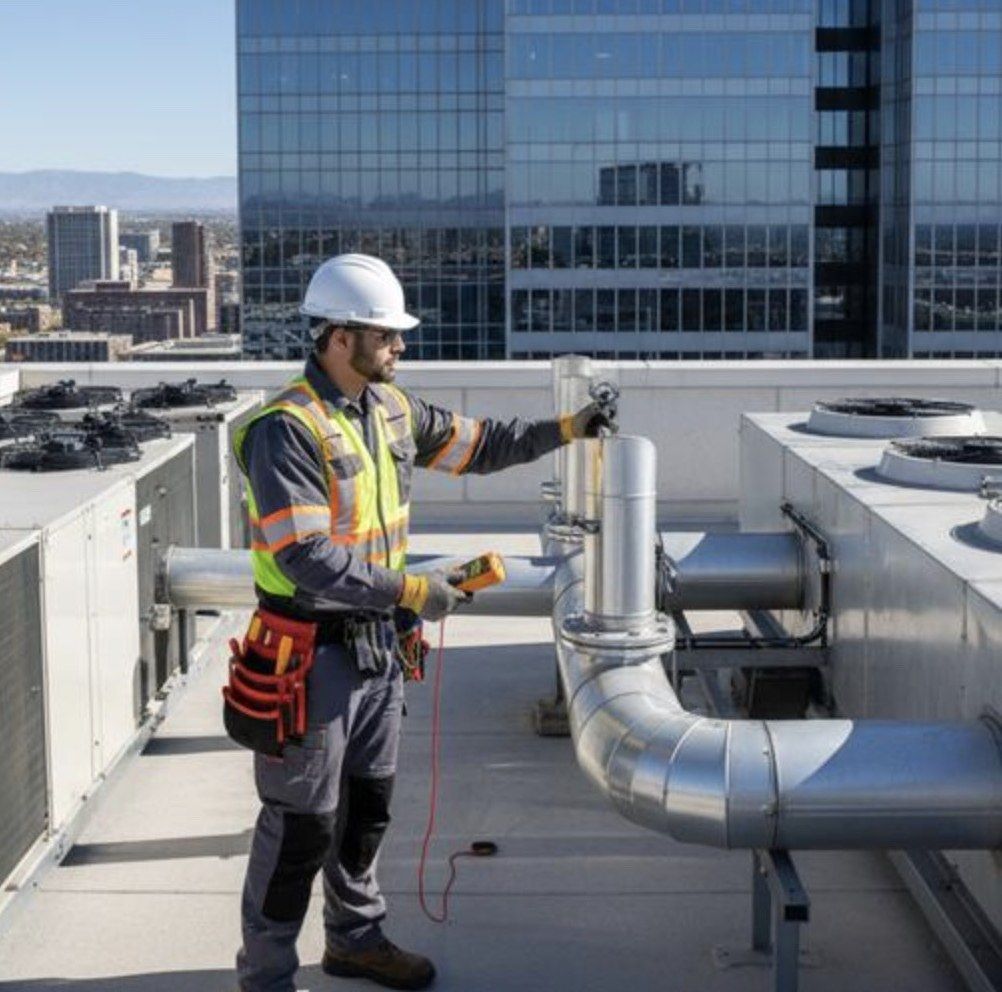
In short
HVAC controls services make sure commercial heating, cooling and ventilation plant responds correctly to occupancy, temperature and time. Engineers check sensors, thermostats, valves, actuators and time schedules, correct setpoints and interlocks, and make sure HVAC equipment reports properly to the building management system, so comfort improves and plant stops running when it is not needed.
What HVAC controls services involve
- sensor checks and recalibration (temperature, humidity, CO2, pressure)
- valve and actuator operation tests
- local controller and thermostat checks
- time schedule and setpoint reviews
- interlock and safety checks such as frost protection and fan proving
- checks that HVAC points report correctly to the BMS
When controls work is needed
- rooms are too hot or cold despite plant working
- heating and cooling run at the same time
- plant runs overnight or at weekends when the building is empty
- BMS alarms are frequent or ignored
- a fit-out or change in use has altered zones and occupancy
Equipment covered
| Item | Examples |
|---|---|
| Field devices | Room and duct sensors, CO2 sensors, pressure switches, flow switches |
| Final elements | Control valves, actuators, damper motors, variable speed drives |
| Local controls | Fan coil controllers, AC central controllers, thermostats |
| BMS points | HVAC inputs, outputs, schedules and alarms on an existing system |
Our process
- Describe the symptoms and the controls installed.
- We test devices and review settings on site.
- Faulty devices are repaired or replaced, and settings corrected with your agreement.
- Changes are documented so the facilities team knows what was altered.
Typical applications
Offices with comfort complaints, hotels with uneven room temperatures, retail units with plant running out of hours, and buildings preparing for energy audits.
Maintenance considerations
Sensors drift. Include sensor checks in planned maintenance and record any setpoint changes. Uncontrolled overrides are a common cause of wasted energy.
Compliance and safety
Controls must keep safety interlocks such as frost protection, fire alarm shutdowns and fan proving working. Changes should be documented and tested.
Coverage across London
We take HVAC controls enquiries across London and Greater London. See areas we cover.
HVAC Controls & BMS: frequently asked questions
Do you install complete building management systems?
This page focuses on controls for HVAC plant, including sensors, actuators, local controllers, time schedules and the HVAC points on an existing BMS. For a complete new BMS or a major controls upgrade, tell us the scope and we will confirm how we can help.
Why are our heating and cooling fighting each other?
Simultaneous heating and cooling often comes from overlapping setpoints, missing deadbands, faulty sensors or valves passing water. Correcting control strategies can improve comfort and cut energy use.
Can better controls reduce energy use?
Often, yes. Matching time schedules to occupancy, widening deadbands, recalibrating sensors and enabling demand-controlled ventilation are common improvements. The saving depends on the starting point.
Our BMS shows alarms we do not understand. Can you help?
Yes. We can review HVAC-related alarms, find the causes, and recommend whether to repair equipment, adjust settings or rationalise nuisance alarms.
Do you work with existing controls contractors?
Yes. Where a separate controls specialist maintains the BMS software, we coordinate with them on the HVAC side so changes are made safely and documented.
UK guidance and references
Primary and industry sources relevant to this subject. Always check the current edition and how it applies to your building.
- Approved Document L: conservation of fuel and power GOV.UK
- Ventilation in the workplace Health and Safety Executive