
In short
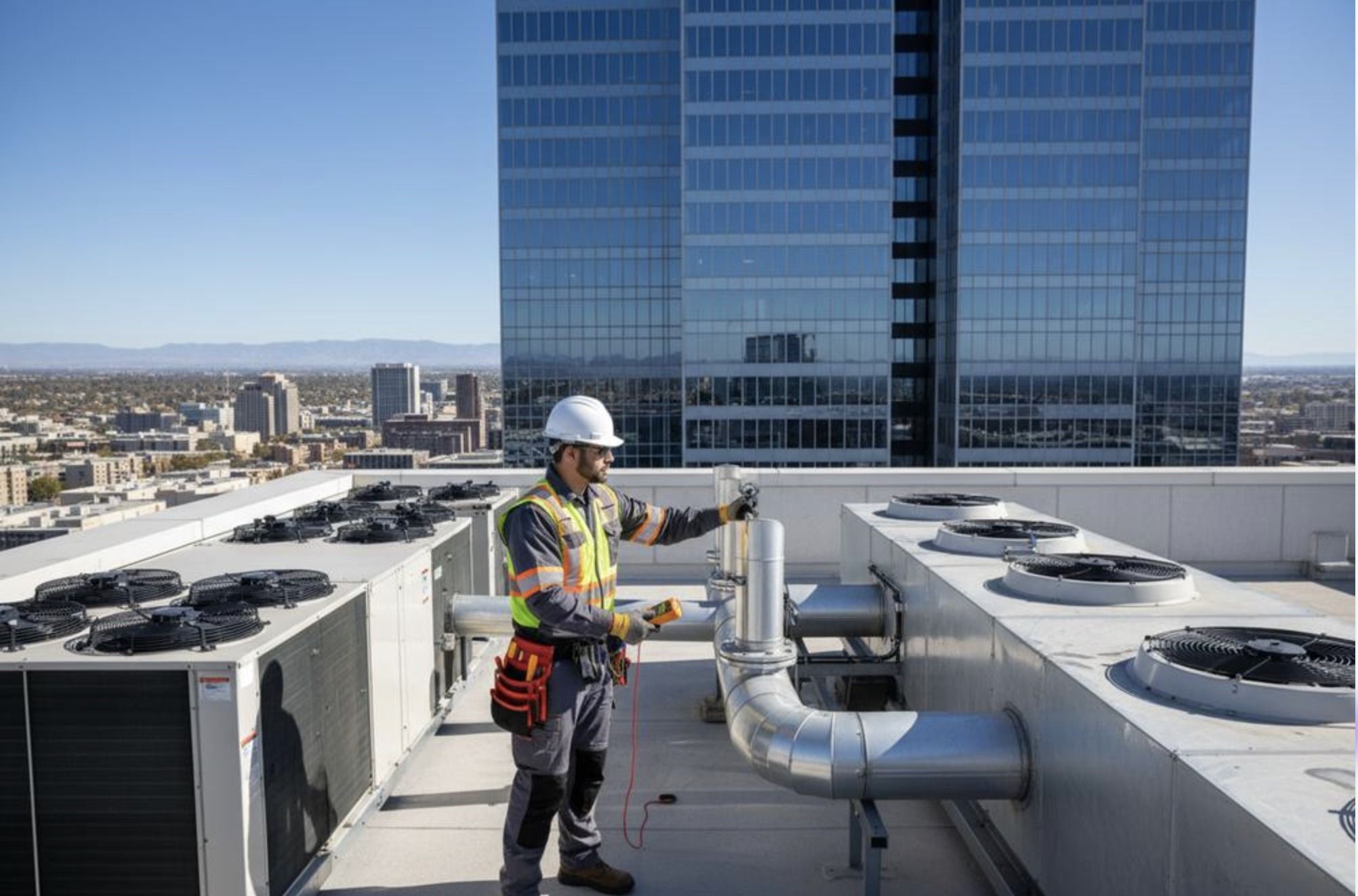
An HVAC maintenance contract is an agreement for planned preventive maintenance of a building's heating, ventilation and air conditioning assets. It sets out which equipment is covered, what tasks are done and how often, how faults are reported and handled, what records you receive, and how costs are structured, giving facilities teams predictable budgets and documented compliance.
What a maintenance contract involves
A well-structured contract answers five questions before the first visit:
| Question | What the contract defines |
|---|---|
| What is covered? | An asset register with location, make, model and condition for each item |
| What is done? | Task lists for each asset type, aligned with manufacturer guidance and SFG20 |
| How often? | Visit frequencies per asset, from monthly to annual |
| How are faults handled? | Reporting routes, out-of-hours arrangements and approval of remedial works |
| What do you receive? | Visit records, defect reports, F-gas logs and periodic summaries |
When a contract makes sense
- the building has several HVAC systems or many terminal units
- you need documented evidence of maintenance for insurers, landlords or auditors
- reactive repairs are becoming frequent and unpredictable
- you want predictable annual budgets for HVAC upkeep
- the facilities team needs a single point of contact for HVAC
Equipment that can be included
Air handling units, fan coil units, VRF/VRV and split air conditioning, chillers, heat pumps, ventilation and extract fans, pumps serving HVAC circuits, and HVAC controls and BMS points.
Our process
- Enquiry. Share your asset list, current schedules and any known issues.
- Survey. We verify the assets on site and note condition and access.
- Proposal. You receive a schedule, inclusions and exclusions, and pricing.
- Mobilisation. Site inductions, access arrangements and a visit calendar are agreed.
- Delivery. Planned visits, records and defect reports throughout the contract.
- Review. Periodic reviews adjust the schedule as plant ages or usage changes.
Typical applications
Multi-floor offices, hotels, retail portfolios, schools and colleges, healthcare premises and mixed-use developments with shared plant.
Maintenance considerations
- Avoid vague scopes. “Service the air conditioning” invites disputes. Contracts should list assets and tasks.
- Agree the defect process. Decide who approves remedial work and up to what value.
- Watch for change. New or removed equipment should be added to or taken off the asset register promptly.
- Use the data. Visit records reveal recurring faults and help plan replacements. See HVAC system assessments.
Compliance and safety
A contract helps you show that HVAC duties are being met: workplace ventilation and temperature, F-gas leak checks and records, and legionella control measures where water systems are involved. TM44 energy inspections are carried out separately by accredited energy assessors, but your maintenance records support them.
Coverage across London
We take maintenance contract enquiries for commercial buildings across London and Greater London. See areas we cover.
Maintenance Contracts: frequently asked questions
What should an HVAC maintenance contract include?
At minimum, an asset list, the tasks and frequencies for each asset, reporting arrangements, how reactive faults are handled, what parts and consumables are included or excluded, how remedial work is approved, and the contract term and pricing.
Are filters and parts included in the contract price?
That depends on the contract. Some agreements include consumables such as filters and belts; others price them separately. Major parts and remedial works are usually quoted separately for approval. The quotation sets this out clearly.
Can a contract include emergency response?
Contracts can include agreed arrangements for reactive and out-of-hours call-outs. Any contracted response times are set out in writing in the agreement rather than assumed.
What is SFG20 and do we need to use it?
SFG20 is the industry standard maintenance specification for building services, published by BESA. It is widely used to set tasks and frequencies. Many clients and insurers expect schedules aligned with it, although it is not a legal requirement in itself.
How long are maintenance contracts?
Terms vary. Many commercial HVAC contracts run for one to three years with annual reviews. The term and notice period are agreed in the contract.
Can you take over our existing contract mid-term?
Yes, subject to your existing contract terms. We start with a survey and records review so the new schedule reflects the equipment on site.
UK guidance and references
Primary and industry sources relevant to this subject. Always check the current edition and how it applies to your building.
- SFG20 standard maintenance specification BESA / SFG20
- Workplace (Health, Safety and Welfare) Regulations 1992 legislation.gov.uk
- F gas in refrigeration and air conditioning GOV.UK
- Air conditioning inspections for buildings GOV.UK